
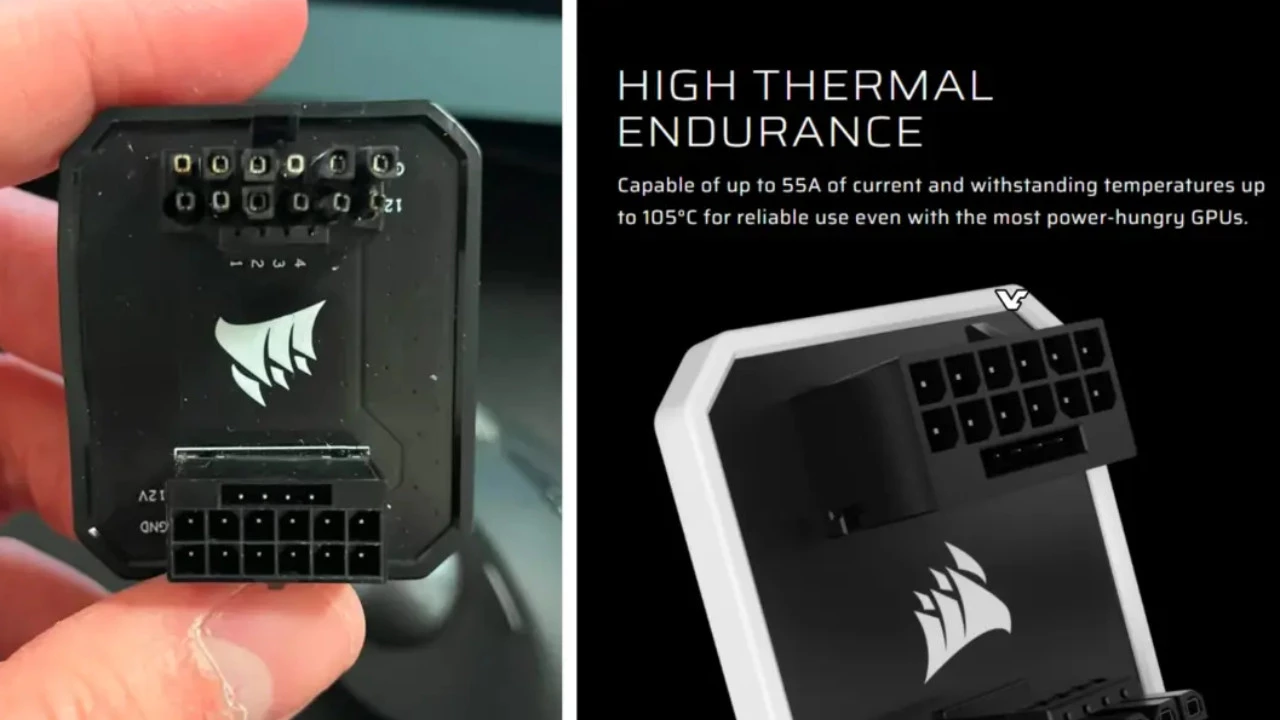
Nothing Is Safe From the Destructive Power of RTX 4090: Corsair Power Bridge Adapter Falls Victim to Notorious 16-Pin Connector
The ongoing saga of melting 16-pin power connectors on NVIDIA graphics cards has taken another troubling turn, with a new high-profile casualty emerging from the gaming community. This time, a Corsair Power Bridge adapter has been destroyed due to issues with the controversial 12VHPWR connector, adding yet another chapter to what has become one of the most persistent hardware reliability concerns in recent GPU history. The incident serves as a stark reminder that even premium accessories from reputable manufacturers are not immune to the fundamental design challenges plaguing this power delivery standard.
The 12VHPWR connector, also known as the 16-pin or 12+4 pin connector, was introduced alongside NVIDIA’s RTX 4000 series graphics cards in late 2022. Designed to deliver up to 600 watts of power through a compact form factor, the connector was meant to simplify cable management and future-proof high-performance graphics cards. However, almost immediately after the RTX 4090 launched, reports began flooding social media and tech forums about connectors melting, burning, and in some cases causing permanent damage to expensive graphics cards worth over $1,500.
Initial investigations by NVIDIA and independent analysts pointed to several potential causes for the failures. The most commonly cited issue involves improper seating of the connector, where users may not have fully inserted the plug into the GPU socket. Even a slight gap of just a millimeter can cause increased resistance at the contact points, generating excessive heat that eventually leads to thermal runaway and melting. Additionally, the bend radius of cables near the connector has been identified as a contributing factor, with sharp bends potentially loosening connections over time or damaging the delicate pins within the housing.
Corsair’s Power Bridge adapter was designed as a premium solution to address cable management concerns with modern high-power graphics cards. The accessory allows users to route power cables more elegantly through their systems, reducing visual clutter and potentially improving airflow. However, the destruction of this adapter demonstrates that the underlying connector technology remains fundamentally problematic, regardless of the quality of components used in the power delivery chain. This incident highlights that the issue lies not with adapter or cable quality, but with the connector specification itself.
The broader implications of these ongoing failures extend beyond individual hardware casualties. The PC building community has grown increasingly frustrated with what many perceive as inadequate testing and rushed implementation of the new power standard. Some enthusiasts have opted to avoid RTX 4090 purchases entirely, while others have invested in third-party adapter solutions or carefully followed elaborate installation procedures to minimize risk. Power supply manufacturers have responded by developing improved cables with more robust connection mechanisms and clearer seating indicators, though these solutions address symptoms rather than root causes.
NVIDIA has acknowledged the issues and worked with the PCI-SIG standards body to develop an updated specification called 12V-2×6, which features design improvements aimed at preventing the melting problems. The new standard includes a modified sense pin configuration and improved mechanical retention to ensure proper seating. However, the transition to this updated connector has been gradual, and many existing RTX 4090 cards and accessories in the market still use the original problematic design. Consumers are left navigating a confusing landscape of compatible and potentially risky components.
For affected users, the financial and emotional toll can be significant. A destroyed graphics card often falls outside warranty coverage if the manufacturer determines user error in connector installation was responsible. The Corsair Power Bridge incident adds another expensive component to the growing list of casualties, reinforcing concerns about the long-term reliability of current-generation high-end gaming systems. As the industry moves toward even more power-hungry components with next-generation GPUs, the pressure to definitively solve these connector issues only intensifies.
The saga of the 16-pin connector serves as a cautionary tale about the challenges of pushing power delivery technology to its limits. While the demand for more powerful graphics cards continues unabated, the infrastructure required to safely deliver that power must keep pace. Until the industry fully transitions to improved connector designs and manufacturers implement more robust quality control measures, enthusiasts building high-end systems will need to remain vigilant, carefully inspecting connections and following best practices to protect their significant hardware investments from becoming the next viral melting story.