
AI’s Growing Hunger: South Korea Launches Major Initiative to Develop Next-Generation Power Semiconductors
The artificial intelligence revolution is rapidly transforming not just software and algorithms, but the very hardware that powers our digital infrastructure. As AI systems grow more sophisticated and energy-hungry, they’re creating unprecedented demand for computing resources that extends far beyond memory and processors. Now, power delivery systems have become the critical bottleneck, and South Korea is positioning itself at the forefront of solving this challenge through an ambitious new government initiative.
The South Korean government has officially launched a large-scale state-funded research and development program aimed at creating and mass-producing next-generation power semiconductors. This strategic initiative represents a significant investment in the country’s semiconductor ecosystem, targeting the often-overlooked but increasingly crucial components that manage electrical power in everything from data centers to electric vehicles. The program signals Seoul’s recognition that the future of computing depends not just on faster processors, but on more efficient power management technologies.
Power semiconductors, unlike their more famous cousins in CPUs and memory chips, specialize in converting and controlling electrical energy. These components determine how efficiently electricity flows through electronic devices, managing everything from voltage conversion to power switching. Traditional silicon-based power semiconductors have served the industry well for decades, but they’re reaching their physical limitations just as demand for power-efficient computing is skyrocketing. The explosive growth of artificial intelligence, particularly large language models and generative AI systems, has accelerated this crisis dramatically.
Modern AI data centers consume staggering amounts of electricity. Training a single large AI model can require as much energy as several homes use in an entire year. Graphics processing units and specialized AI accelerators generate tremendous heat and require sophisticated power delivery systems to operate efficiently. Industry analysts estimate that data center power consumption could double or even triple within the next decade, driven primarily by AI workloads. This reality has made power semiconductor technology a matter of national strategic importance for technology-leading nations.
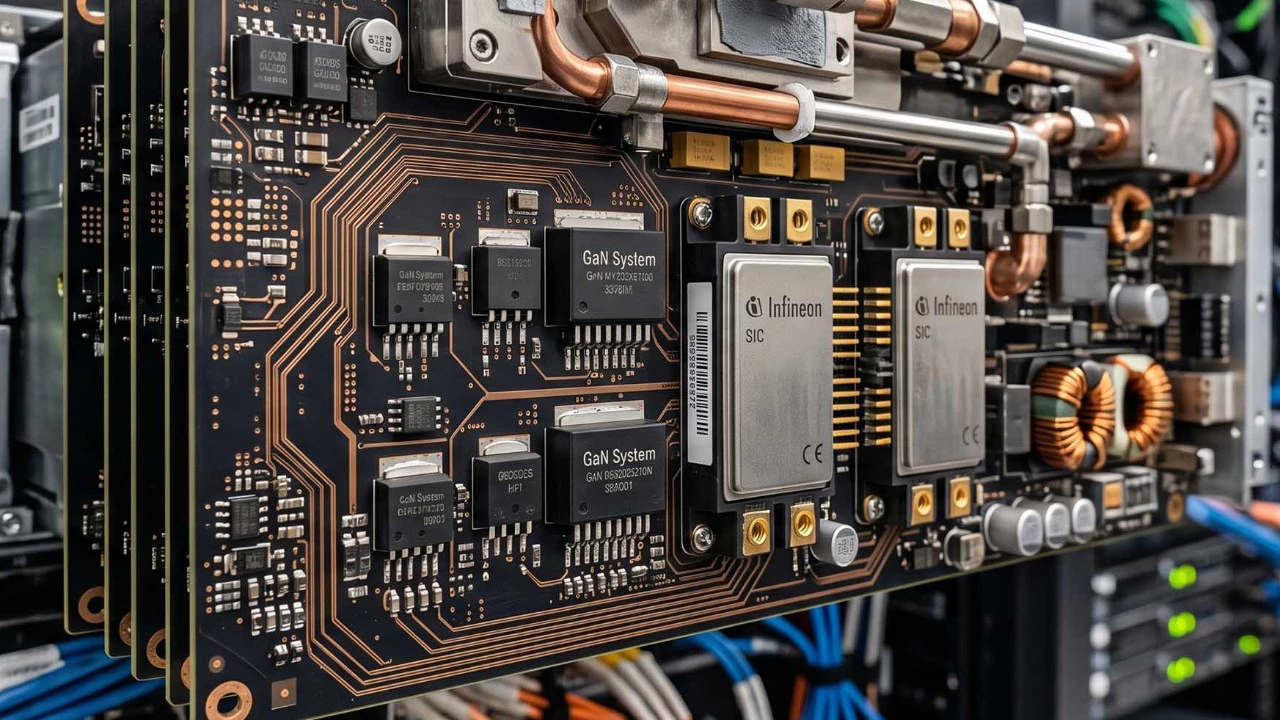
South Korea’s initiative focuses heavily on wide-bandgap semiconductors, particularly silicon carbide (SiC) and gallium nitride (GaN) technologies. These materials offer significant advantages over traditional silicon: they can operate at higher temperatures, switch faster, and handle greater voltages while losing less energy to heat. Silicon carbide devices, for instance, can reduce power losses by up to 50% compared to conventional silicon solutions. Such improvements translate directly into smaller, lighter, and more efficient power systems – critical factors for both data centers seeking to reduce their enormous electricity bills and electric vehicles needing to maximize battery range.
The timing of this announcement reflects broader geopolitical dynamics in the global semiconductor industry. The United States, China, Japan, and European nations have all launched substantial programs to secure their semiconductor supply chains and develop advanced chip technologies. South Korea, home to industry giants Samsung and SK Hynix, already dominates the memory chip market but recognizes the need to expand its capabilities into power semiconductors. This sector has traditionally been led by companies like Infineon, STMicroelectronics, and ON Semiconductor, but Asian manufacturers are rapidly closing the gap.
Historical context adds weight to South Korea’s strategic pivot. The country’s semiconductor industry emerged from humble beginnings in the 1970s and 1980s, when Korean companies were largely assembling chips designed elsewhere. Through sustained government support and aggressive corporate investment, South Korea transformed itself into a semiconductor superpower within just a few decades. The current R&D program appears designed to replicate this success in the power semiconductor domain, potentially reshaping another critical segment of the global electronics supply chain.
Experts suggest the implications extend beyond pure technology. As artificial intelligence continues its rapid integration into every aspect of modern life, the countries and companies that control the power infrastructure enabling AI will hold significant economic and strategic leverage. South Korea’s investment represents a calculated bet that the future belongs not just to those who design the smartest algorithms, but to those who can most efficiently power them. The race for AI supremacy, it turns out, is as much about watts and efficiency as it is about neural networks and training data.