
Western Press Goes Hands-On with Tomb Raider: Legacy of Atlantis, Shares First Impressions from Summer Game Fest 2025
The gaming world received a monumental surprise at Summer Game Fest 2025 when Crystal Dynamics unveiled Tomb Raider: Legacy of Atlantis, a complete reimagining of the original 1996 adventure that launched one of gaming’s most iconic franchises. Western gaming outlets have now published their first hands-on previews of the title, and the consensus appears overwhelmingly positive. Built from the ground up on Unreal Engine 5, this ambitious project aims to introduce a new generation of players to Lara Croft’s legendary debut while delivering a fresh experience for longtime fans who remember exploring those polygonal tombs nearly three decades ago.
The original Tomb Raider, developed by Core Design and published by Eidos Interactive, revolutionized the action-adventure genre when it launched on Sega Saturn, PlayStation, and PC in 1996. Players followed British archaeologist Lara Croft as she searched for the mysterious Scion artifact, journeying through Peru, Greece, Egypt, and the lost city of Atlantis. The game sold over seven million copies and transformed Lara into a cultural phenomenon, appearing on magazine covers, in commercials, and eventually in two Hollywood films. Legacy of Atlantis promises to honor this heritage while completely rebuilding the experience with modern gameplay sensibilities and cutting-edge visual technology.
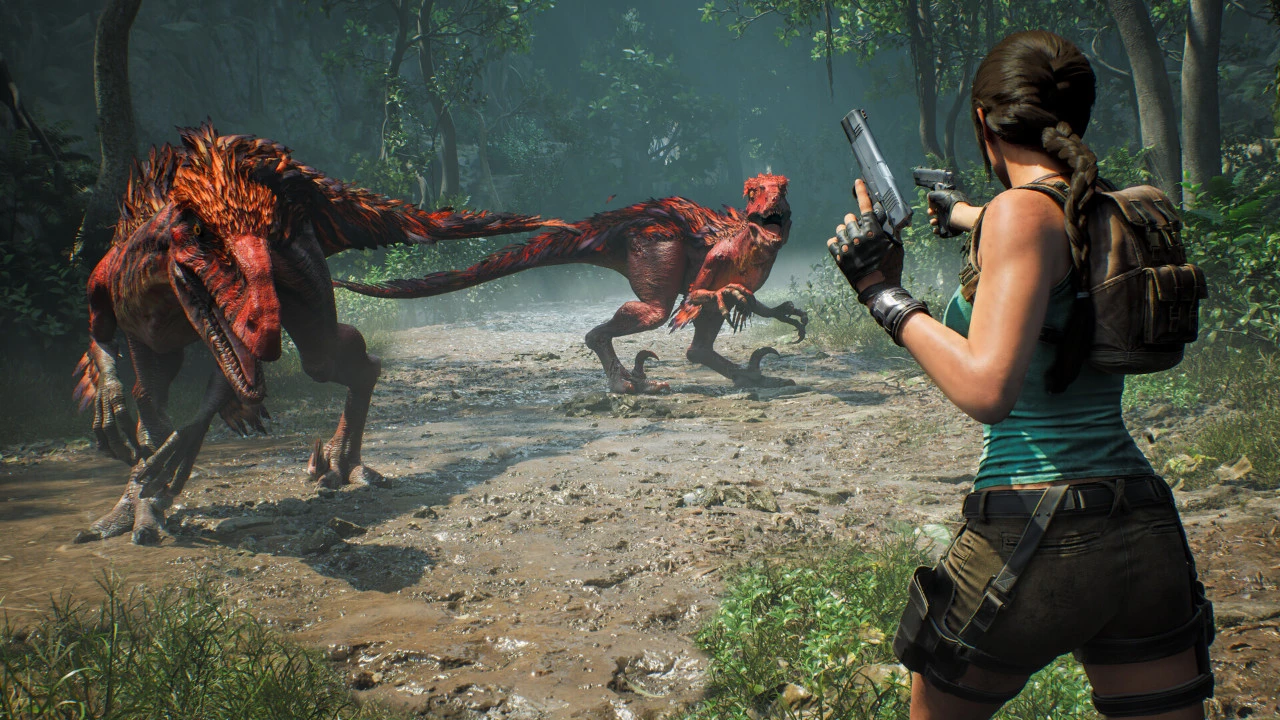
Journalists who experienced the demo at Summer Game Fest reported being impressed by the dramatic visual overhaul. Unreal Engine 5’s Nanite technology renders incredibly detailed environments, from crumbling Peruvian temples overgrown with vegetation to the eerie underwater passages leading to Atlantis. Lumen global illumination creates atmospheric lighting that shifts dynamically as Lara moves her torch through dark corridors. Publications like IGN and GameSpot noted that the developers have struck an impressive balance between photorealistic graphics and the somewhat fantastical, mysterious atmosphere that defined the original game. Character animations have been completely rebuilt using motion capture, giving Lara fluid, realistic movement while maintaining her signature acrobatic style.
Perhaps most significantly, Crystal Dynamics has substantially reworked the gameplay mechanics while preserving the exploration-focused design philosophy that made the original so memorable. The classic grid-based movement system has been replaced with smooth, modern traversal mechanics inspired by the recent reboot trilogy, which began with 2013’s Tomb Raider and concluded with 2018’s Shadow of the Tomb Raider. However, previews indicate that combat takes a backseat to puzzle-solving and environmental navigation, returning to the franchise’s roots. The developers have reportedly expanded many of the original’s puzzle rooms, adding new layers of complexity while maintaining recognizable elements that veterans will appreciate. Lock-on targeting for combat has been refined, and Lara’s dual pistols make a triumphant return as her signature weapons.
The narrative approach represents another area of significant evolution. While the original game featured minimal storytelling, Legacy of Atlantis expands on Lara’s backstory and motivations without contradicting established lore. The game explores her relationship with her mentor Werner Von Croy, her complicated feelings about her aristocratic upbringing, and her transformation into the confident adventurer players know. Voice actress Camilla Luddington, who portrayed Lara in the reboot trilogy, returns to the role, providing continuity for players who discovered the character through those recent titles. Cutscenes are rendered in-engine, and the developers have added optional audio logs and documents that flesh out the mythology surrounding Atlantis and the Scion.
Industry analysts view Legacy of Atlantis as a strategic move by Crystal Dynamics and parent company Embracer Group to reinvigorate one of gaming’s most valuable intellectual properties. The Tomb Raider franchise has sold over 95 million copies across all titles since its inception, but recent years have seen increased competition in the action-adventure space from series like Uncharted and Horizon. By returning to the original game’s setting while incorporating lessons learned from the successful reboot trilogy, the studio appears positioned to appeal to multiple audience segments simultaneously. The announcement also follows Netflix’s animated Tomb Raider series, suggesting a coordinated multimedia approach to maintaining the franchise’s cultural relevance.
Tomb Raider: Legacy of Atlantis is currently scheduled for release in late 2026 on PlayStation 5, Xbox Series X|S, and PC. Crystal Dynamics has confirmed that the game will support ray tracing on all platforms, with a performance mode targeting 60 frames per second and a quality mode emphasizing visual fidelity. While no pricing details have been announced, the studio indicated that additional information would be revealed at future gaming events throughout the coming year. For fans who have followed Lara Croft’s adventures since the beginning, this reimagining represents both a nostalgic journey home and an exciting step forward for one of gaming’s most enduring heroines.