
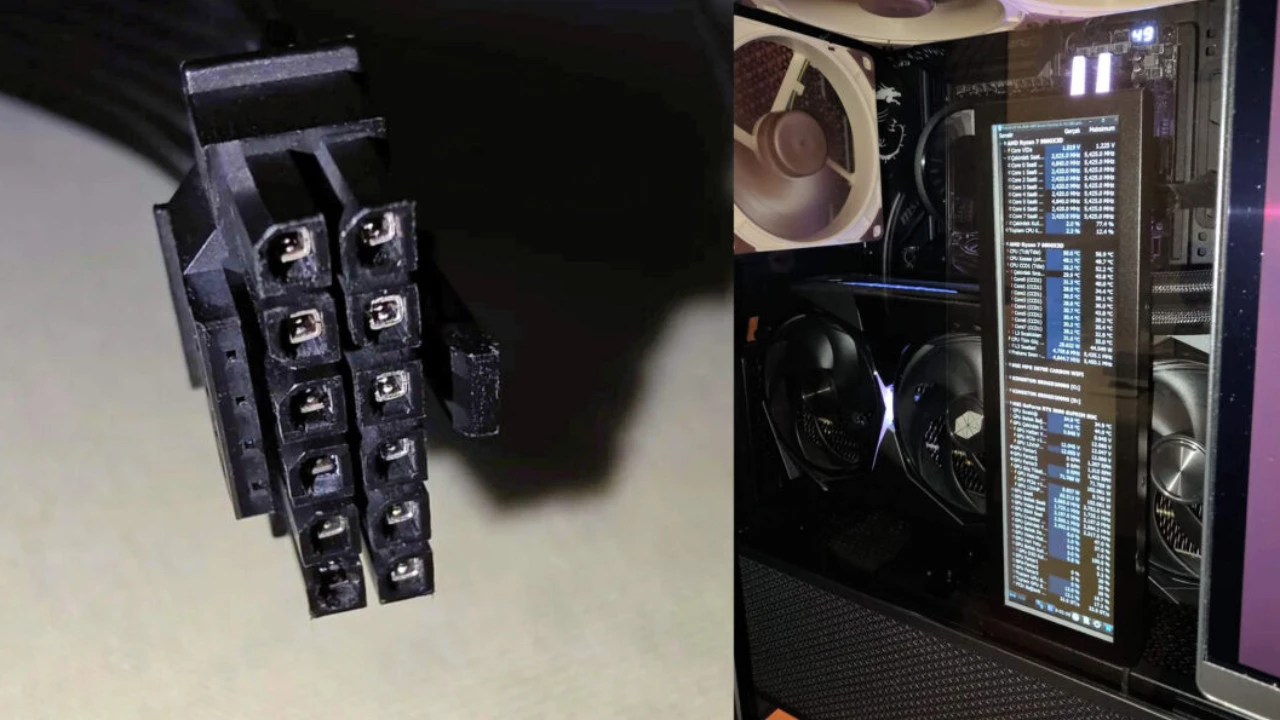
Regular Inspections Failed to Prevent Power Connector Meltdown on NVIDIA’s Flagship RTX 5090
A new incident involving a melted 16-pin power connector on NVIDIA’s flagship RTX 5090 graphics card has emerged, accompanied by particularly ironic details that highlight the ongoing struggles with the company’s controversial power delivery system. The affected user, who shared their experience on social media and hardware enthusiast forums, revealed that they had been religiously checking the connector’s condition on a regular basis — a precaution that ultimately proved futile in preventing the catastrophic failure.
Vigilant Maintenance Couldn’t Prevent Failure
The owner of the damaged RTX 5090 explained that they were well aware of the potential issues surrounding the 12VHPWR and its successor 12V-2×6 connectors, having followed numerous reports of similar incidents since NVIDIA introduced the new power standard with the RTX 4000 series. Despite conducting visual inspections approximately every two weeks to ensure the cable was properly seated and showing no signs of degradation, the connector still succumbed to extreme heat damage. The melting occurred during what the user described as a normal gaming session, with no unusual power draws or system behaviors preceding the failure.
The Troubled History of High-Power Connectors
The 12VHPWR connector, which can supply up to 600 watts of power in an impressively small design, has sparked significant debate since it debuted in 2022. This connector was created as part of the ATX 3.0 power supply specification with the goal of streamlining cable organization while meeting the considerable power demands of contemporary high-performance graphics cards. Nevertheless, the design has demonstrated issues, with multiple reports of melting incidents linked to improper connection, manufacturing variations, and the fundamental difficulties of transmitting such high current through such compact contact areas. NVIDIA and connector manufacturers have implemented several modifications to resolve these concerns, but issues continue even with the revised 12V-2×6 version found in the RTX 5000 series.
Technical Causes Behind Connector Failures
Industry experts have pointed to several potential causes for these ongoing failures. The primary concern remains the sensitivity of the connection to even slight misalignment or incomplete insertion. Unlike traditional 6-pin or 8-pin PCIe power connectors, which have more forgiving tolerances, the high-density 16-pin design requires near-perfect contact across all terminals to distribute the electrical load evenly. When even one or two pins fail to make solid contact, the remaining connections must carry additional current, leading to increased resistance and heat generation. This thermal buildup can quickly escalate, causing the plastic housing to soften and eventually melt, potentially damaging both the cable and the graphics card itself.
RTX 5090’s Extreme Power Demands
The RTX 5090, launched in early 2025, represents NVIDIA’s most powerful consumer graphics card to date, featuring the Blackwell architecture and a thermal design power rating that can exceed 500 watts under load. This extreme power consumption makes proper connector function absolutely critical. NVIDIA has consistently maintained that when properly installed according to specifications, the connectors are safe and reliable. The company recommends ensuring the cable is inserted fully until a click is heard, maintaining a straight cable run without sharp bends near the connector, and using only certified cables from reputable power supply manufacturers.
Why Regular Inspections May Not Be Enough
What makes this specific case particularly significant is the owner’s careful maintenance practices. Many earlier meltdown situations could be blamed on user mistakes — cables not completely seated, sharp bends creating stress on the connection, or the use of inferior adapters. In this instance, though, the routine checks should have identified any visible warning indicators like discoloration, abnormal wear, or loosening of the connection. The reality that the failure happened despite these safeguards indicates that certain failure modes may emerge quickly or stay undetectable until catastrophic damage takes place. This poses important questions about whether visual examination by itself is adequate to guarantee safe operation.
Community Response and Future Concerns
The broader PC gaming community has responded to this latest incident with a mixture of frustration and resignation. While NVIDIA’s graphics cards continue to offer unmatched performance for enthusiasts and professionals alike, the persistent power connector issues have become a significant consideration for potential buyers. Some users have advocated for returning to multiple traditional 8-pin connectors, while others suggest that NVIDIA and the industry should develop entirely new solutions that prioritize reliability alongside power density. As graphics cards continue to push power consumption boundaries, finding a truly dependable method of delivering hundreds of watts safely remains one of the most pressing engineering challenges facing hardware manufacturers today.