
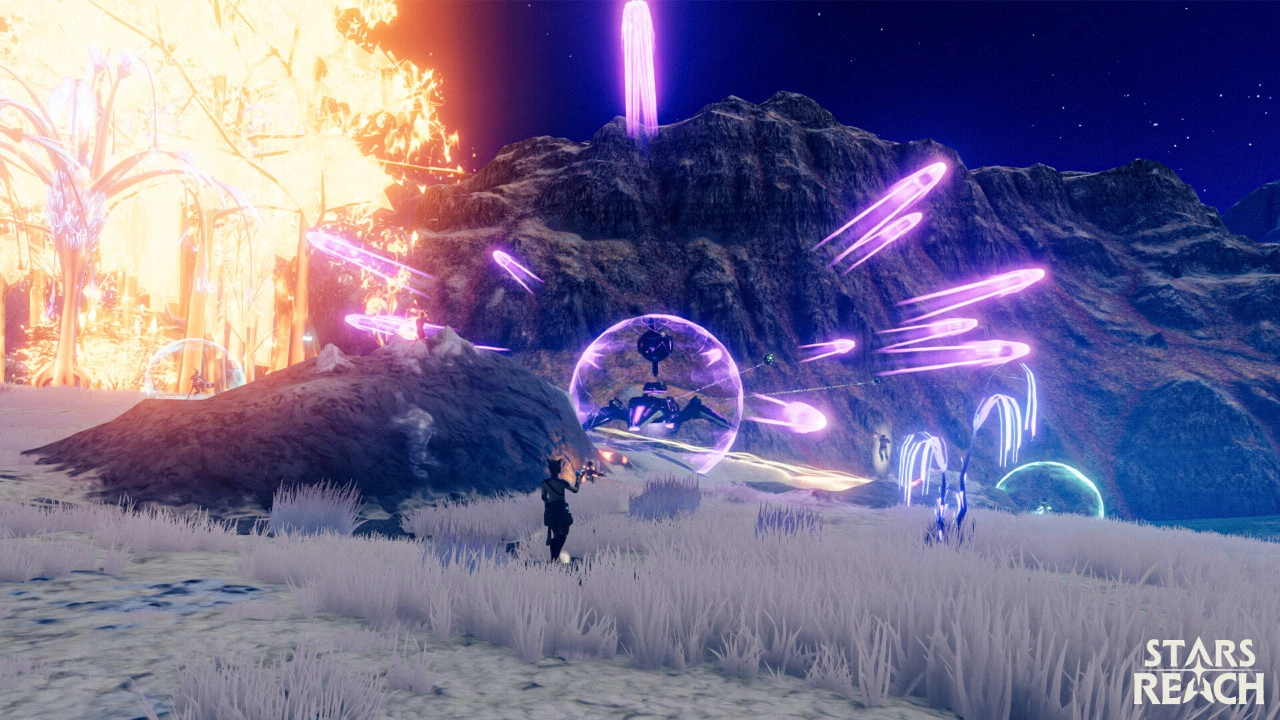
The End of the Guide Era: Stars Reach Developers Create a Wiki-Proof MMO That Players Must Explore from Scratch
At Summer Game Fest 2025, Playable Worlds unveiled their ambitious science fiction MMO Stars Reach, a project led by legendary game designer Ralph Koster, best known as the creative mind behind Ultima Online. However, what truly captured the gaming community’s attention wasn’t just the game’s impressive visuals or its pedigree – it was the developers’ bold claim that they’ve designed a game specifically engineered to resist the creation of traditional wiki guides and walkthroughs.
A Fundamental Shift in Content Discovery
The concept represents a fundamental shift in how MMO games approach content discovery. In contemporary online gaming, players usually consult community-made wikis and databases within days of a game’s release, where every secret, optimal build, and hidden location is carefully cataloged. Stars Reach seeks to completely eliminate this phenomenon by utilizing procedurally generated content and dynamic world systems that guarantee no two players encounter the same universe. This means conventional guides simply cannot be created because the information would be irrelevant to other players’ unique game instances.
Ralph Koster’s Design Philosophy
Ralph Koster brings decades of experience to this project, having revolutionized the MMO genre with Ultima Online in 1997 – a game that pioneered many concepts still used in online games today. His design philosophy has always emphasized emergent gameplay and player-driven narratives over scripted content. Koster’s influential book “A Theory of Fun for Game Design” explored how games create meaningful experiences through discovery and mastery, principles that clearly inform Stars Reach’s anti-wiki approach. The designer has long been critical of how modern games become “solved” within weeks of release, turning exploration into mere checkbox completion.
Technical Implementation
The technical implementation of this wiki-resistant design involves several sophisticated systems working in concert. According to the developers, Stars Reach features procedurally generated planets, each with unique ecosystems, resources, and challenges. The game’s economy, crafting systems, and even quest structures adapt based on server-wide player behavior, meaning strategies that work one week might become obsolete the next. This living, breathing universe ensures that player knowledge remains valuable only through direct experience rather than external research.
Community Response and Industry Impact
The gaming community’s reaction has been mixed but largely intrigued. Veteran MMO players who recall the early days of online gaming – when discovery was authentic and communities developed around shared exploration rather than efficiency guides – have voiced enthusiasm for returning to that era. However, some players and accessibility advocates have expressed concerns about whether this approach might push away casual gamers who depend on guides to enjoy content they might otherwise never experience. The debate addresses fundamental questions about game design: should games prioritize mystery and discovery, or accessibility and player agency?
A Pivotal Moment in Gaming History
Industry analysts note that Stars Reach arrives at an interesting moment in gaming history. The rise of AI-powered game assistants and the proliferation of content creator guides on platforms like YouTube have made game knowledge more accessible than ever. Some argue this has diminished the magic of exploration that defined earlier generations of gaming. Playable Worlds appears to be betting that a significant player base exists for games that cannot be optimized or “figured out” – experiences that remain mysterious regardless of how many hours the community invests in documentation efforts.
The science fiction setting of Stars Reach provides an ideal canvas for these experimental design philosophies. Players will explore an expansive universe of diverse planets, each offering unique challenges and opportunities. The game promises deep crafting systems, player-driven economies, and meaningful social interactions – all hallmarks of Koster’s previous work. As the MMO genre continues to evolve beyond its World of Warcraft-dominated era, projects like Stars Reach represent bold attempts to recapture the sense of wonder that originally drew millions of players into online worlds. Whether this anti-wiki approach proves successful could influence game design philosophy for years to come.