
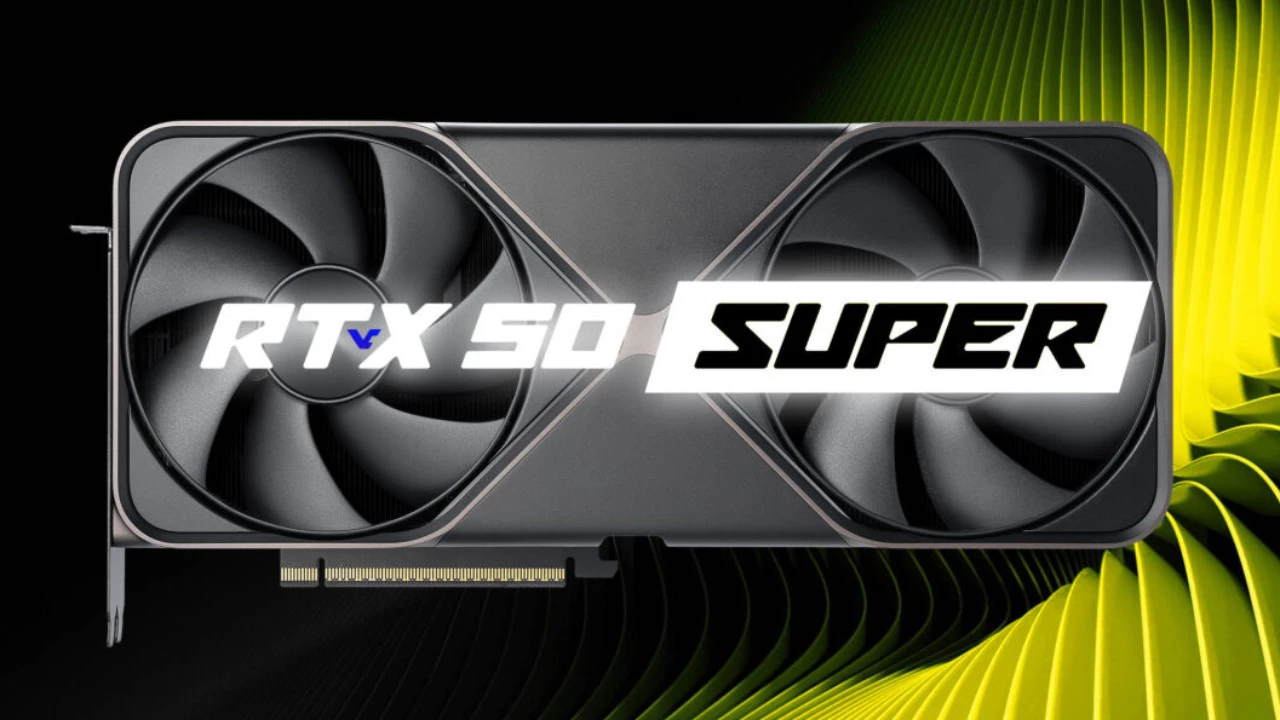
NVIDIA GeForce RTX 50 SUPER Series Expected to Arrive No Earlier Than CES 2027
New details have emerged regarding NVIDIA’s plans for updating its current generation of graphics processors, with industry insiders suggesting that enthusiasts eager for the RTX 50 SUPER lineup will need to exercise considerable patience. According to recent leaks circulating within the technology community, the refreshed SUPER variants of the GeForce RTX 50 series are not expected to debut until the Consumer Electronics Show in January 2027, marking a significant wait for consumers hoping to see mid-cycle improvements to the current architecture.
The information comes at a time when NVIDIA has only recently begun rolling out its standard RTX 50 series cards to the market. The company’s traditional product cycle typically sees SUPER variants arrive approximately 12 to 18 months after the initial launch of a new generation, offering improved specifications and better price-to-performance ratios. However, the projected 2027 timeline suggests NVIDIA may be adjusting its release strategy, potentially in response to market conditions, manufacturing considerations, or competitive pressures from AMD and Intel.
History of NVIDIA’s SUPER Branding Strategy
NVIDIA introduced its SUPER branding back in 2019 with the RTX 20 SUPER lineup, delivering significant performance gains compared to the original RTX 2060, 2070, and 2080 graphics cards. This approach was highly effective, enabling NVIDIA to sustain market presence between major architecture launches while offering consumers improved products at competitive prices. The RTX 30 SUPER series adopted the same formula, although its launch faced challenges due to the worldwide semiconductor shortage that affected the industry during 2020 and 2021.
Manufacturing and Industry Factors Behind the Delay
The extended timeline for the RTX 50 SUPER cards may reflect broader changes in the semiconductor industry. NVIDIA has been navigating increasingly complex manufacturing processes, with each new generation pushing the boundaries of chip fabrication technology. The company’s partnership with TSMC for advanced node production has been crucial to its success, but securing sufficient wafer capacity remains a challenge amid high demand for AI accelerators and data center GPUs. Industry analysts suggest that NVIDIA may be prioritizing its highly profitable enterprise and AI segments over consumer graphics products.
Competitive Pressures from AMD and Intel
Market observers note that the delay could also be a strategic response to the competitive landscape. AMD continues to develop its RDNA architecture, with rumors suggesting aggressive pricing strategies for upcoming Radeon products. Meanwhile, Intel’s Arc graphics division, despite a rocky start, has shown improvement with each driver update and continues to iterate on its discrete GPU offerings. By spacing out its product releases, NVIDIA can maintain pricing power and avoid cannibalizing sales of its existing RTX 50 series inventory.
What This Means for Consumers
For consumers currently in the market for a new graphics card, the news suggests that the standard RTX 50 series will remain the flagship option for an extended period. This could influence purchasing decisions, as buyers weigh whether to invest in current hardware or wait for potential improvements. Historical data shows that SUPER variants typically offer 10 to 15 percent performance gains over their predecessors at similar or lower price points, making them attractive options for value-conscious enthusiasts.
The gaming industry continues to push hardware requirements higher, with recent titles demanding increasingly powerful GPUs to achieve smooth frame rates at high resolutions. Technologies like ray tracing and AI-powered upscaling through DLSS have become standard features in modern games, placing additional emphasis on having capable graphics hardware. As developers continue to leverage these technologies, the importance of staying current with GPU generations has never been more pronounced. The wait until CES 2027 may feel lengthy for dedicated gamers, but NVIDIA’s track record suggests the eventual SUPER refresh will deliver meaningful improvements worth the anticipation.