
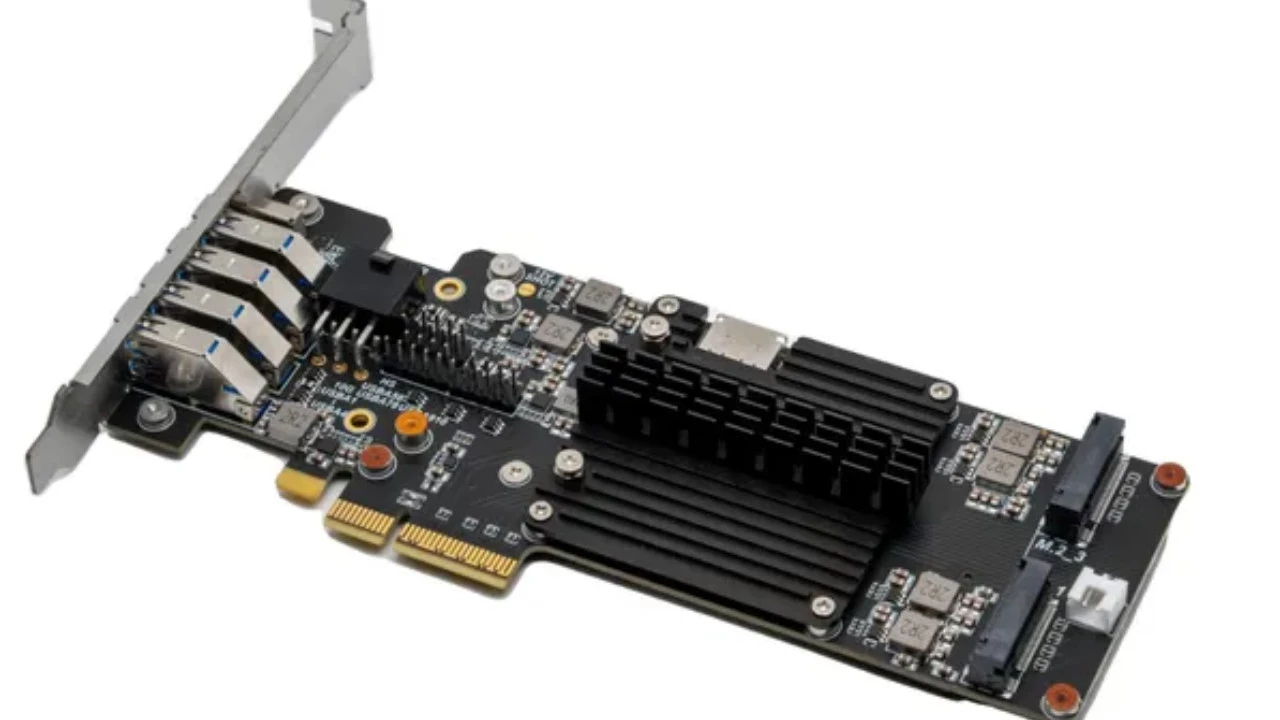
New PCIe Card Adds Four M.2 SSDs to Your PC Using AMD B650 Motherboard Chipset Technology
How Modern PC Architecture Enables Chipset Repurposing
Modern PC architecture has evolved dramatically over the past decade, transforming the central processor into what essentially functions as a complete System on Chip (SoC). Today’s CPUs contain all the basic controllers necessary for system operation, while the motherboard chipset, known as the Platform Controller Hub (PCH), connects to the processor as a standard I/O hub through PCI Express lanes. This architectural shift has opened up fascinating possibilities for expansion, including a new PCIe card that leverages AMD’s B650 chipset to add four M.2 SSD slots to any compatible system.
The B650 Chipset as a Storage Controller
This inventive expansion card showcases a smart engineering approach that reimagines the AMD B650 chipset—normally used in motherboards built for Ryzen 7000 series processors—as the central component of a storage expansion device. By leveraging the chipset’s built-in ability to handle multiple high-speed connections, the card enables support for up to four M.2 NVMe solid-state drives at once. This method stands apart considerably from conventional RAID controllers or basic PCIe bifurcation cards, since it uses a fully-featured chipset to tackle the intricate job of coordinating multiple storage devices via a single PCIe link to the host system.
Technical Specifications and Capabilities
The AMD B650 chipset, which debuted in 2022 alongside the Ryzen 7000 series processors, was designed to support the AM5 platform and offers robust connectivity options. It provides up to eight PCIe 4.0 lanes and four PCIe 3.0 lanes, along with native support for USB 3.2 Gen 2 ports. When repurposed as an expansion card controller, these capabilities translate directly into the ability to manage multiple high-bandwidth storage devices. The chipset communicates with the host CPU through a PCIe uplink, effectively acting as an intelligent bridge between the main system and the attached storage drives.
Target Users and Market Position
This kind of storage expansion solution meets an increasing demand among power users, content creators, and professionals who need vast quantities of high-speed storage. Video editors handling 8K footage, game developers organizing extensive asset libraries, and data scientists working through massive datasets all gain advantages from having multiple NVMe drives at their disposal. Conventional approaches often mean buying costly workstation motherboards featuring numerous M.2 slots, or investing in enterprise-grade storage controllers that may run into thousands of dollars. The B650-based expansion card provides a middle option—professional-grade storage expansion at a more affordable price point.
Compatibility and Performance Considerations
The technical execution prompts intriguing considerations regarding system compatibility and performance. Because the card incorporates a complete motherboard chipset, it needs proper initialization during system startup and suitable driver support from the operating system. Users operating Windows 11 or current Linux distributions should see the drives detected as standard NVMe devices, although some configuration might be required based on the particular system arrangement. The PCIe bandwidth accessible to the card will ultimately dictate the combined performance when all four drives are running concurrently—a single PCIe 4.0 x4 connection delivers roughly 8 GB/s of bandwidth, which must be distributed among all connected drives.
Historical Context and Future Implications
Historical context helps illuminate why this solution is now possible. In earlier PC generations, chipsets were essential components that handled nearly all system connectivity, from memory control to graphics interfaces. Intel’s integration of memory controllers into CPUs beginning with the Nehalem architecture in 2008 started a trend of moving functionality into the processor itself. AMD followed suit and accelerated this integration with their Zen architecture. Today’s chipsets primarily serve as I/O expansion hubs, making them ideal candidates for repurposing in creative ways like this storage expansion card. The modular nature of modern chipset design means the silicon can function independently of a traditional motherboard environment.
Practical Considerations for Enthusiasts
For enthusiasts considering this upgrade path, several factors merit consideration. Power delivery becomes important when running four NVMe drives, as high-performance SSDs can draw significant wattage under load. Thermal management also requires attention—the card likely needs adequate airflow or possibly active cooling to prevent throttling during sustained write operations. Additionally, users should verify their system’s PCIe slot configuration and available bandwidth before purchasing, as optimal performance requires a direct connection to CPU PCIe lanes rather than routing through another chipset.
The emergence of such products signals a maturing market for PC storage expansion and demonstrates how standard components can be creatively repurposed. As data storage requirements continue growing exponentially and NVMe technology becomes increasingly affordable, solutions that maximize storage density within existing systems will likely gain popularity. Whether this particular implementation becomes mainstream or remains a niche product for enthusiasts, it represents an innovative approach to solving real-world computing challenges using readily available silicon in unexpected ways.