
Intel Prepares ATX12VO v3 Standard That Will Finally Eliminate the 24-Pin Motherboard Connector
Understanding the ATX12VO Standard
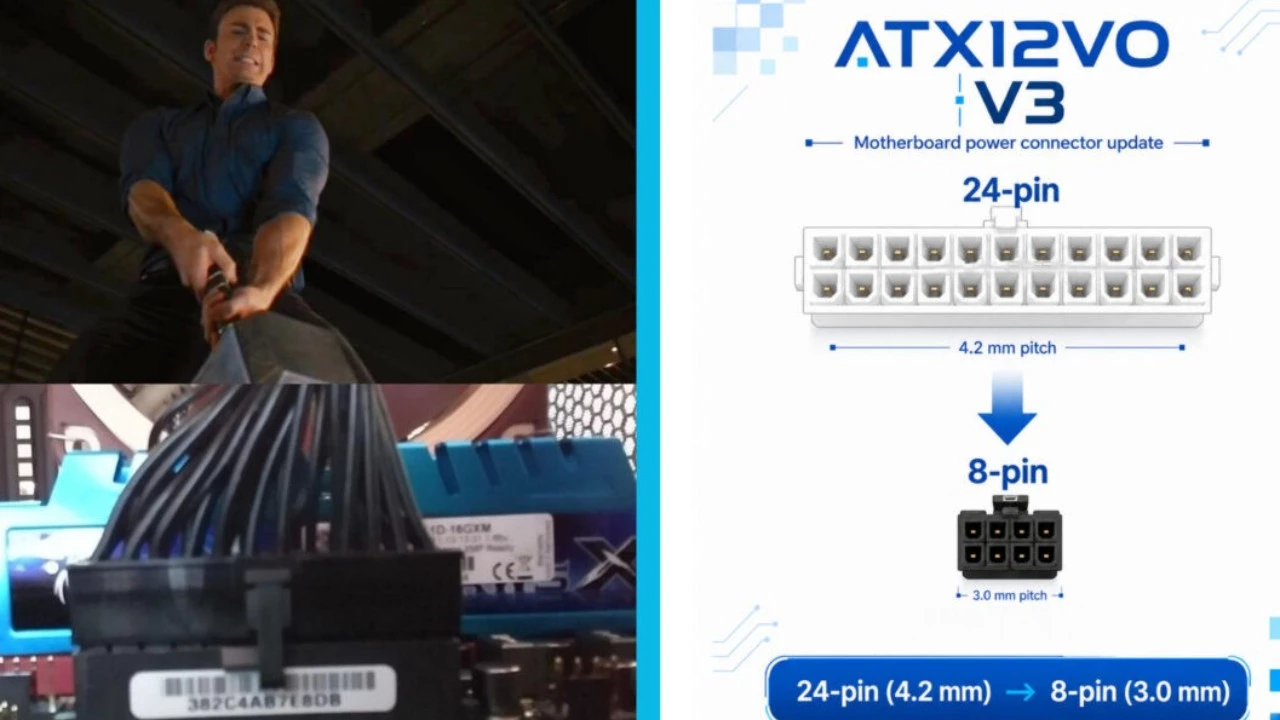
Intel is actively preparing for a major reform of the consumer power supply and motherboard industry. The company is developing the ATX12VO v3 standard, which promises to fundamentally change how power is delivered to modern computer systems. This new specification aims to completely phase out the traditional 24-pin power connector that has been a staple of PC building for over two decades, marking one of the most significant shifts in computer hardware design since the original ATX standard was introduced in 1995.
The ATX12VO (12-Volt Only) standard embodies Intel’s concept for a more efficient and simplified power delivery architecture. In contrast to conventional ATX power supplies that supply multiple voltage rails including 3.3V, 5V, and 12V directly from the PSU, the ATX12VO method delivers exclusively 12V power to the motherboard. The motherboard’s voltage regulators then manage the conversion to lower voltages as required by different components. This change transfers greater responsibility to motherboard manufacturers but provides several benefits regarding efficiency and cable management.
Evolution from ATX12VO 1.0 to Version 3
The evolution toward 12-volt-only power delivery has been gradual but persistent. Intel first introduced the ATX12VO 1.0 specification in 2019, followed by version 2.0 in 2022. These earlier iterations used a 10-pin connector instead of the traditional 24-pin configuration, significantly reducing cable clutter inside computer cases. However, adoption has been limited primarily to OEM systems and pre-built computers from major manufacturers like Dell and HP, with the enthusiast PC building market largely sticking to conventional ATX power supplies due to compatibility concerns and the established ecosystem of existing hardware.
The forthcoming ATX12VO v3 standard is anticipated to resolve many of the issues that have impeded broad adoption. Industry analysts indicate that Intel is collaborating closely with leading power supply manufacturers including Corsair, Seasonic, EVGA, and be quiet! to guarantee a seamless transition. The new standard is reportedly set to feature enhanced connector designs that provide superior power delivery for high-end graphics cards and processors, which have experienced substantial increases in power consumption in recent years. Contemporary flagship GPUs from NVIDIA and AMD can consume upwards of 400-600 watts, while Intel’s own high-performance desktop processors have exceeded 250 watts in certain configurations.
Benefits of Eliminating the 24-Pin Connector
The benefits of eliminating the 24-pin connector extend beyond mere aesthetics. Traditional ATX power supplies operate at lower efficiency when delivering power through multiple voltage rails, with some energy lost during the conversion process inside the PSU. By shifting to a 12V-only design, power supplies can be designed with fewer components, potentially reducing manufacturing costs and improving overall system efficiency. Studies have shown that ATX12VO systems can achieve efficiency improvements of 2-5% compared to traditional designs, which translates to lower electricity bills and reduced heat generation over the lifetime of a computer system.
Challenges and Industry Concerns
However, the transition is not without challenges. Motherboard manufacturers will need to incorporate more robust voltage regulation modules (VRMs) to handle the increased conversion demands, potentially raising motherboard costs. Additionally, the existing ecosystem of power supplies, extension cables, and accessories built around the 24-pin standard represents billions of dollars in installed hardware that cannot simply be discarded. The PC building community has expressed mixed reactions, with some enthusiasts welcoming the modernization while others worry about compatibility with existing components and the potential for a fragmented market during the transition period.
Timeline and Market Impact
Intel’s timing for the ATX12VO v3 standard seems calculated, aligning with wider industry movements toward more efficient computing. With growing emphasis on environmental sustainability and energy efficiency regulations in markets like the European Union, the transition toward more efficient power delivery systems corresponds with global trends. The standard is anticipated to be officially unveiled later this year, with consumer products potentially arriving on the market by late 2025 or early 2026. If successful, this initiative could mark the most substantial change to PC power architecture since the debut of modular power supplies in the mid-2000s, fundamentally transforming how computers are constructed for the next generation of hardware enthusiasts and system integrators alike.