
Budget PC Enthusiast Proves Intel Core i7-6700K Can Still Handle RTX 3080 With Creative Modifications
Understanding CPU Bottlenecking With Aging Hardware
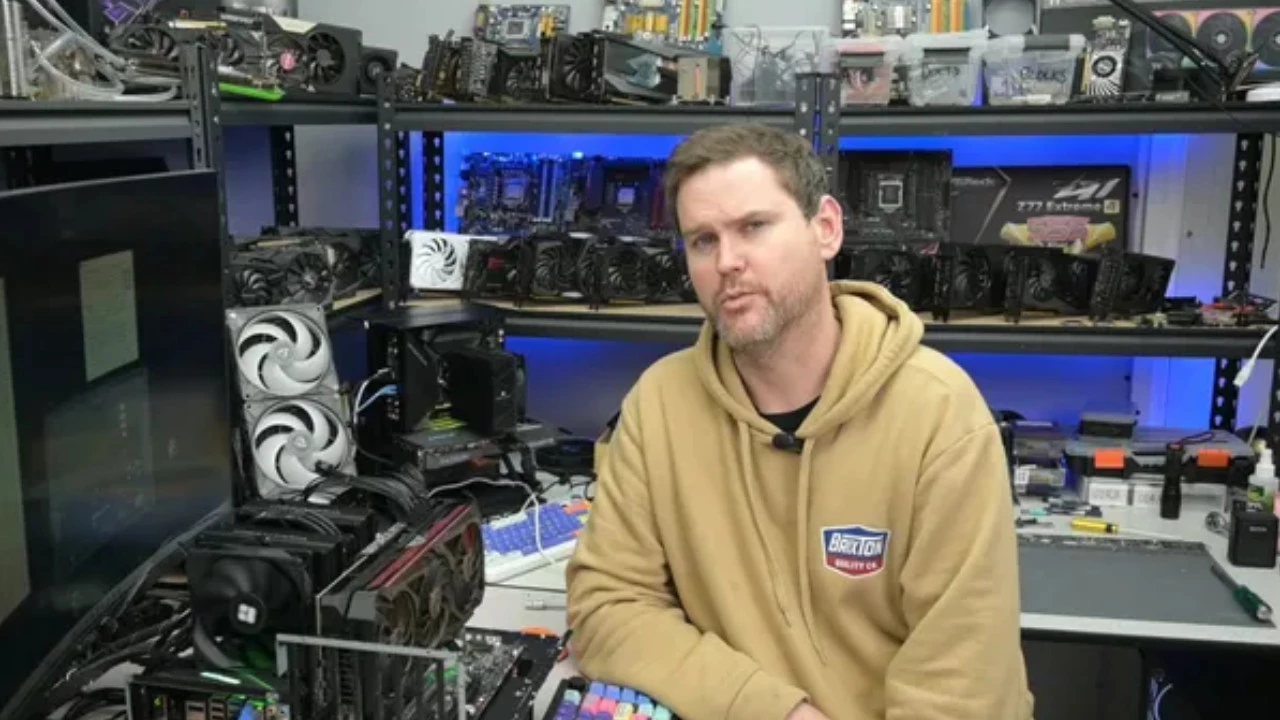
In the world of PC gaming, one of the most frustrating scenarios occurs when a powerful graphics card is held back by an aging processor. This phenomenon, known as CPU bottlenecking, has become increasingly common as modern GPUs have grown exponentially more powerful while many users continue to run older hardware. A YouTube creator from the channel TrashBench recently decided to tackle this exact problem head-on, demonstrating that with enough ingenuity and determination, even severely mismatched components can be made to work together more harmoniously.
The Intel Core i7-6700K, launched in August 2015, was previously regarded as a top-tier processor and the standout component of Intel’s sixth-generation Skylake architecture. With four cores and eight threads, a base frequency of 4.0 GHz, and boost capabilities up to 4.2 GHz, this chip delivered exceptional performance for its time. Nevertheless, almost ten years later, the computing environment has transformed significantly. Contemporary games and software increasingly require additional cores, faster clock speeds, and enhanced instructions per clock (IPC) performance that more recent architectures deliver. When combined with an NVIDIA RTX 3080, a graphics card capable of producing hundreds of frames per second in resource-intensive games, the i7-6700K becomes a notable bottleneck.
The RTX 3080, launched in September 2020 as part of NVIDIA’s Ampere architecture lineup, represents a massive leap in graphics processing capability. With 8,704 CUDA cores, 10GB of GDDR6X memory, and support for advanced features like hardware-accelerated ray tracing and DLSS, this GPU was designed for 4K gaming and professional workloads. However, all this power means nothing if the CPU cannot feed data to the graphics card quickly enough. In scenarios where the processor becomes the bottleneck, users may experience stuttering, lower frame rates than expected, and generally underwhelming performance despite having invested in premium graphics hardware.
TrashBench’s Optimization Techniques
The TrashBench channel has built its reputation on unconventional approaches to hardware optimization, often working with older or budget-constrained systems. In this latest experiment, the creator explored various methods to extract maximum performance from the aging i7-6700K when paired with the RTX 3080. These modifications typically include aggressive overclocking, which pushes the processor beyond its stock frequencies by adjusting voltage and multiplier settings. The Skylake architecture was particularly well-known in the enthusiast community for its overclocking potential, with many examples of chips reaching 4.6 GHz or higher on adequate cooling solutions.
Advanced Tuning and System Optimization
Beyond basic frequency tweaks, dedicated system tuners frequently employ memory overclocking, timing modifications, and BIOS adjustments to extract every available frame from their components. The i7-6700K’s K-series classification denotes an unlocked multiplier, making it perfect for this kind of experimentation. Furthermore, methods such as turning off unneeded background processes, fine-tuning Windows configurations for gaming performance, and choosing suitable in-game options that transfer workload to the GPU can all help minimize CPU bottleneck impacts. Some enthusiasts even venture into more radical approaches like direct die cooling or specialized thermal compounds.
Why This Matters for Budget-Conscious Gamers
This type of content resonates strongly with a significant portion of the PC gaming community who cannot afford to upgrade their entire platform whenever new hardware becomes available. A complete platform upgrade from Skylake to a modern system would require not only a new CPU but also a new motherboard and DDR5 memory, potentially costing several hundred dollars before even considering the graphics card. By demonstrating that creative optimization can extend the useful life of older hardware, creators like TrashBench provide valuable guidance and inspiration for budget-conscious enthusiasts worldwide.
Lessons for Future Upgrade Decisions
The experiment also highlights an important trend in modern PC gaming: the increasing divergence between CPU and GPU performance requirements. While graphics cards have seen massive generational improvements, many games still rely heavily on single-threaded CPU performance, which has improved more gradually. This creates a situation where even mid-range processors from recent generations can sometimes outperform older flagship chips in gaming scenarios. For users considering similar upgrades, the TrashBench experiment serves as both a cautionary tale about bottlenecking and an encouraging demonstration that with sufficient knowledge and effort, hardware limitations can often be mitigated rather than requiring expensive replacements.